Studying in Germany: a complete guide for francophone families
Near-zero tuition fees, engineering and science excellence, 1,800+ English-taught programmes (mostly Master's): Germany is Europe's most underrated study destination.
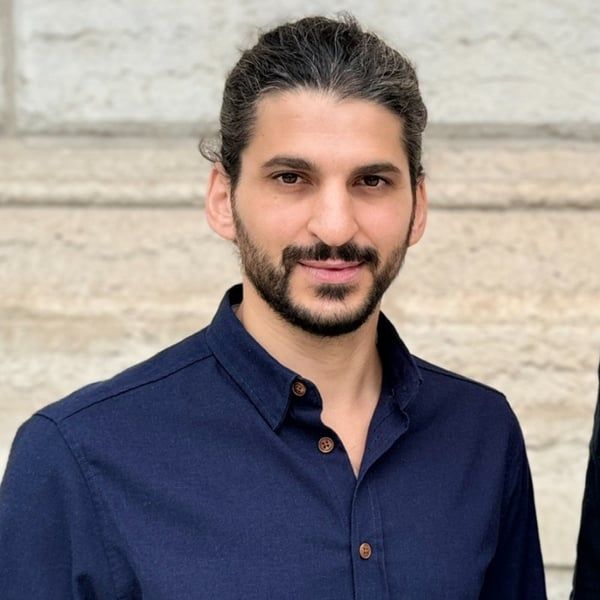
Constantin Mardoukhaev
Co-founder, Axiom Academic · Published on 17 April 2026
Country at a glance
- Application platform
- uni-assist or direct application depending on the university
- Languages of instruction
- German, English (international programmes)
- Average annual cost
- €0 to €1,500 (public universities, depending on the Land) + ~€350 Semesterbeitrag
- Bachelor's duration
- 3 years (Bachelor)
- Visa required
- No
- Degree recognition
- German degrees benefit from strong readability across the EU thanks to the Bologna Process. Recognition in France is facilitated via the ENIC-NARIC centre.
Germany is probably the best value-for-money destination in Europe for higher education. Near-zero tuition fees at most public universities, world-class engineering and science departments, and an economy that absorbs its graduates better than any other country on the continent. Yet very few francophone families consider it spontaneously.
It’s a blind spot. When we work with families on their international study plans, the UK and the Netherlands come up every time. Germany, almost never. That’s a missed opportunity, because for many student profiles, it’s objectively the strongest option.
This guide explains how the German university system actually works, what it really costs, and how to navigate the application process when coming from the French system.
1. The German university system
German higher education rests on two distinct pillars:
- Universität — The traditional research university, covering the full range of disciplines (sciences, humanities, law, medicine, engineering). This is the closest equivalent to French universities and Anglo-Saxon research universities.
- Fachhochschule (FH) / Hochschule für angewandte Wissenschaften (HAW) — Universities of applied sciences, more practice-oriented, with integrated internships and direct industry connections. These are not “lesser universities”: in fields like computer science, mechanical engineering, and design, FH graduates often have better employment outcomes than Universität graduates.
The system follows the Bologna framework: Bachelor in 3 years (180 ECTS), Master in 2 years (120 ECTS). Degrees benefit from facilitated recognition across the EU thanks to the Bologna framework.
The universities of excellence
Germany has its own top-tier university groupings:
- TU9 — An alliance of nine leading technical universities (including TU Munich, RWTH Aachen, TU Berlin, TU Darmstadt). These are Germany’s leading technical universities, with TU Munich and RWTH Aachen at the top.
- Exzellenzuniversitäten — A federal programme that distinguishes top research universities. The names to remember: TU Munich, LMU Munich, Heidelberg, Humboldt Berlin, RWTH Aachen, Freie Universität Berlin, Universität Freiburg.
The German Numerus Clausus
An important clarification: the “Numerus Clausus” (NC) in Germany is not an entrance exam. It’s a minimum grade threshold for programmes with limited capacity. It varies by Land and by year. Affected programmes include medicine, pharmacy, law in major cities, and some psychology programmes. For most engineering and science programmes, there is no NC at all (open admission provided the basic requirements are met).
2. Why Germany makes sense for francophone families
Five concrete reasons:
Near-zero tuition fees. The vast majority of German public universities charge no tuition fees to anyone, German or European. The only mandatory cost is the Semesterbeitrag (semester contribution), typically between €150 and €400, which includes a Semesterticket providing free access to public transport across the entire city (and sometimes the whole Land). Notable exception: Baden-Württemberg reintroduced fees of €1,500 per semester for non-EU students.
Over 1,800 English-taught Bachelor’s and Master’s programmes (the majority being Master’s). The DAAD catalogue lists more than 1,800 programmes taught entirely in English. The number of fully English-taught Bachelor’s is smaller, in the low hundreds. It is entirely possible to study in Germany without speaking German at the outset, although learning the language on the ground is strongly recommended for daily life and career prospects.
Excellence in engineering, science, and computer science. German technical universities rank among the world’s best in these fields. The automotive industry (BMW, Mercedes, Volkswagen, Porsche), chemical sector (BASF, Bayer), and tech companies (SAP, Siemens) recruit directly from campus.
Europe’s strongest economy for graduate employment. Youth graduate unemployment in Germany is among the lowest in Europe. The labour market absorbs its engineers, computer scientists, and researchers. A German engineering degree carries significant weight across the European job market.
No visa required for EU citizens. Unlike the UK since Brexit, a French student needs no visa or residence permit to study in Germany. Enrolment, housing, part-time work: everything can be done with a national ID card.
3. The application process for French students
The French Baccalauréat is recognised as a qualifying diploma for admission to German higher education. That’s the starting point.
The uni-assist platform
Most German universities use uni-assist, a centralised service that evaluates international applications. In practice:
- The student creates an account on uni-assist.de
- They upload their documents (transcripts from Première and Terminale, Bac results, language test, motivation letter if required)
- uni-assist verifies eligibility and forwards the file to the university
- Processing fees: approximately €75 for the first application, €30 for each additional one
Notable exceptions: some major universities handle applications directly, without uni-assist. This is the case for TU Munich and LMU Munich, among others. Always check on the target university’s website.
The Studienkolleg
If the academic record does not meet the conditions for direct admission (insufficient grades in certain subjects, or an incompatible combination of specialisations), the university may direct the student to a Studienkolleg: a one-year preparatory programme concluding with an exam (Feststellungsprüfung). This is not a setback. It’s a bridge. But it needs to be factored into the timeline from the start.
The typical application file
- Transcripts from Première and Terminale
- Baccalauréat results
- Language test (German or English depending on the programme)
- Motivation letter (for some programmes only)
- Academic CV (for some Master’s programmes)
4. The real budget
This is Germany’s strongest card, by far.
Tuition fees
| Situation | Annual fees |
|---|---|
| EU student, public university (outside Baden-Württemberg) | €0 |
| EU student, Baden-Württemberg | €0 (the €1,500/semester fee applies to non-EU students only) |
| Non-EU student, Baden-Württemberg | €3,000/year (2 x €1,500) |
| Semesterbeitrag (everywhere) | €150 to €400 per semester (i.e. €300 to €800 per year), including the Semesterticket for public transport |
For a French student: the cost of tuition is the Semesterbeitrag, full stop. That’s €300 to €800 per year, public transport included.
Cost of living
| Item | Monthly range |
|---|---|
| Housing (Studentenwerk student residence) | €250 to €400 |
| Housing (private shared flat) | €350 to €700 |
| Food | €200 to €300 |
| Transport | Included in the Semesterbeitrag |
| Health insurance | ~€110/month (mandatory student rate) |
| Miscellaneous (phone, leisure, books) | €100 to €200 |
Total monthly budget: €850 to €1,200 depending on the city. Munich is the most expensive (plan for €1,100 to €1,400). Leipzig, Dresden, Halle, and Jena are significantly more affordable (€700 to €900).
Housing: Studentenwerk residences are the cheapest option (€250 to €400, utilities included), but spots are limited and waiting lists long. Apply as soon as admission is confirmed.
Part-time work: EU students can work without restriction (non-EU students are limited to 120 full days or 240 half-days per year). “Werkstudent” positions (student jobs in companies, 20 hours/week) are common and well paid, typically between €12 and €18 per hour.
Three-year comparison (Bachelor’s)
| Destination | Estimated total cost (3 years) |
|---|---|
| Germany (mid-size city) | €30,000 to €40,000 |
| Germany (Munich) | €40,000 to €50,000 |
| France (public university + housing) | €25,000 to €35,000 |
| Netherlands | €40,000 to €55,000 |
| United Kingdom (post-Brexit, international) | €115,000 to €200,000 |
Germany sits in the same range as France, for a degree with strong international currency.
5. The language question
This is often the perceived barrier. In many cases, it shouldn’t be.
German-taught programmes
The majority of Bachelor’s programmes are taught in German. To gain admission, students need to demonstrate C1 proficiency through one of these tests:
- TestDaF (Test Deutsch als Fremdsprache): level 4 (TDN 4) in all four skills
- DSH (Deutsche Sprachprüfung für den Hochschulzugang): DSH-2 minimum
Preparing for TestDaF takes 6 to 12 months depending on the starting level. It’s an investment, but German is a major asset on the European job market.
English-taught programmes
More than 1,800 programmes are taught entirely in English (the majority at Master’s level; fully English-taught Bachelor’s programmes exist but number in the low hundreds). Language requirements:
- IELTS: 6.0 to 6.5
- TOEFL iBT: 80 to 90
- Cambridge: B2 First minimum
The recommended strategy
For francophone families, the most pragmatic approach is often:
- Start a Bachelor’s in English in an international programme
- Learn German alongside your studies (most universities offer free or low-cost German courses for enrolled students)
- Reach B2-C1 German proficiency by graduation, which unlocks the German job market
This combination (English-language degree plus working-level German) is extremely valued by employers.
6. Who is Germany right for?
In our experience, Germany is the right choice for families whose child:
- Is aiming for engineering, computer science, natural sciences, or economics — these are the fields where Germany excels and where employment is nearly guaranteed
- Wants to study abroad without stretching the family budget — it’s the only major European destination where tuition is (virtually) free
- Has a disciplined, self-directed work style — the German system provides less hand-holding than the British or French models: limited continuous assessment, heavy independent work, high-stakes end-of-semester exams
- Is open to learning a new language — even in an English-taught programme, German will be a considerable asset
- Is interested in a career in continental Europe — a German degree opens doors in Germany, Switzerland, Austria, the Benelux countries, and beyond
Conversely, Germany is less suited for a student looking for the full Anglo-Saxon campus experience (intense student life, integrated residences), who needs very structured academic guidance, or who is targeting French law or medicine in France.
7. Timeline for a winter semester (Wintersemester) 2027 application
Germany has two intakes: the Wintersemester (October) and the Sommersemester (April). The vast majority of Bachelor’s programmes only start in the Wintersemester.
| Period | Step |
|---|---|
| April-June 2026 | Identify programmes via Hochschulkompass and DAAD |
| June-September 2026 | Prepare the language test (TestDaF, IELTS, or TOEFL depending on the programme) |
| October-December 2026 | Take the language test, gather documents |
| January-March 2027 | Create your uni-assist account, begin filling out applications |
| 15 July 2027 | uni-assist deadline for Wintersemester (check carefully: some universities have earlier deadlines, sometimes as early as 15 May) |
| July-August 2027 | University responses, Studentenwerk housing application |
| September 2027 | Final enrolment (Immatrikulation), move-in |
| October 2027 | Wintersemester start |
Important note: some high-demand programmes (medicine, certain English-taught programmes) have earlier deadlines. Always verify on the university’s own website.
Key takeaways
- Germany offers near-zero tuition fees for European students, with a Semesterbeitrag of €300 to €800 per year that includes public transport.
- Over 1,800 programmes are taught in English (mostly Master’s; English-taught Bachelor’s are fewer), making it possible to start without speaking German.
- German technical universities (TU Munich, RWTH Aachen, TU Berlin) rank among the world’s best in engineering and sciences.
- The total three-year budget is comparable to studying in France (€30,000 to €50,000), for a degree with strong international value.
- The main application deadline via uni-assist is 15 July for the October intake, but some programmes close earlier.
Further reading
- DAAD — German Academic Exchange Service
- Study in Germany — Official portal for international students
- uni-assist — Application platform
- Hochschulkompass — Programme database
- Studentenwerk — Student housing and services
Written by Constantin Mardoukhaev, co-founder of Axiom Academic. Constantin leads the support of francophone families in their international study projects.