
Becoming a Journalist in France: Recognised Schools and Careers
The French route to becoming a journalist: recognised schools, real selectivity, no compulsory diploma, and a precarious entry-level market.
Editorial team · Published on 23 July 2026
12 min read
Contents
- The journalist’s job in brief
- Day to day: duties and setting
- A typical day (fictional example)
- What you study to become a journalist: from school to qualification
- An international perspective
- Careers, entry, and pay
- What profile fits: qualities and interests
- Bridges and course changes: getting it wrong is not the end
- Key takeaways
- Going further
Journalism draws many secondary-school students, often carried by a love of writing, of the news, or of investigation. It is a genuine and absorbing job, but also one of the least clearly mapped in its entry route, and one of the most exposed to precarity at the start of a career.
This profile describes the French route to the profession. The first thing to know, and it often surprises people: no diploma is legally required to practise. You can be a journalist without a journalism school. Yet the profession recognises a closed list of highly selective courses that clearly ease entry into newsrooms. Understanding that nuance is the whole point when you weigh this career.
A word on vocabulary for an international reader. In France, journalism is not a regulated profession: unlike a nurse, an architect, or an avocat, no licence or state diploma gates the job. The French marker of professional status is the carte de presse (press card), a document that certifies paid journalistic activity, not a qualification. We explain below what the recognised schools are, what the press card means, and how far any of it travels beyond France.
The journalist’s job in brief
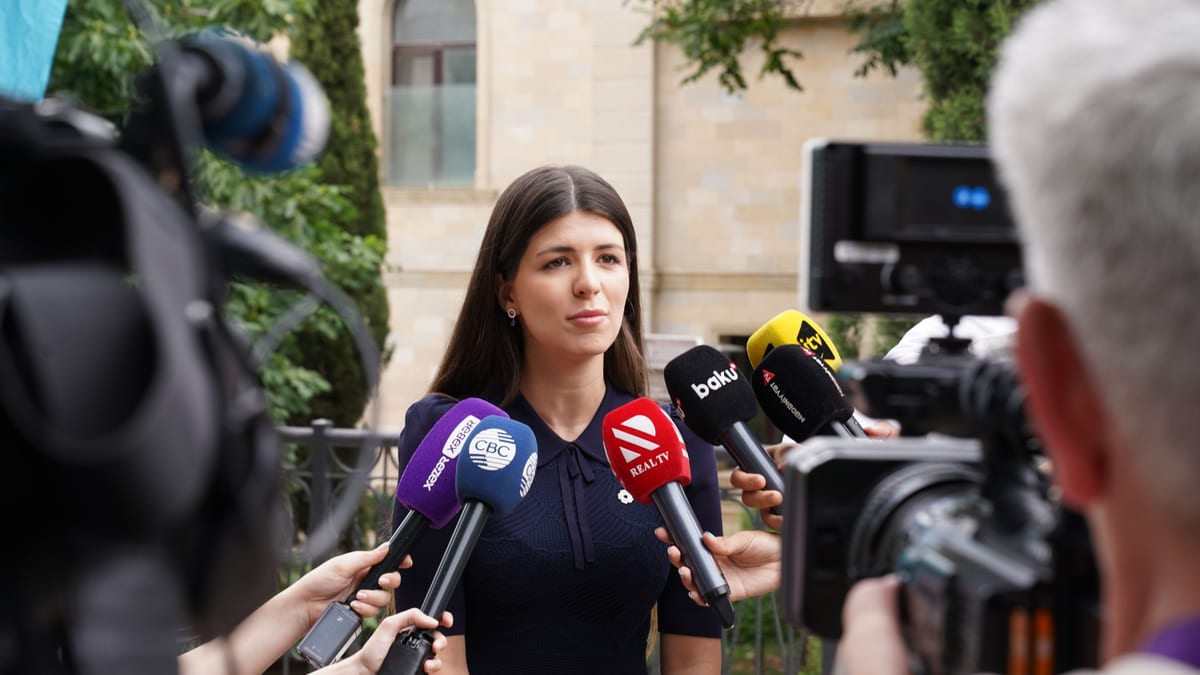
A journalist gathers, checks, prioritises, and shapes information for the public. They investigate, question sources, cross-check facts, write or edit content, and take personal responsibility for the reliability of what they publish. The job covers varied realities: reporter, sub-editor, camera journalist (JRI, journaliste reporter d’images), web journalist, or specialist (sport, economics, science, culture).
The field of practice is broad: the print press (the largest employer, with around 56% of card-holding journalists according to France Travail), radio, television, news agencies, pure players, and online media. Status varies: salaried on a permanent contract, on a fixed-term contract, or a freelancer paid per article.
The title of professional journalist takes the form of the carte de presse, issued by the Commission de la carte d’identité des journalistes professionnels (CCIJP, the commission for the professional journalist’s identity card) to anyone who can show a main, regular, and paid activity in one or more media outlets. For scale: the CCIJP issued a little over 34,000 cards to working journalists in 2022, of which around 1,950 were first applications. The card attests to activity, not to a diploma: this is the heart of what makes the profession distinctive.
Day to day: duties and setting
The daily reality depends heavily on the outlet and the role, but a few duties recur everywhere:
- Researching and verifying information: sources, documents, cross-checks, fact-checking.
- Conducting interviews and covering events in the field: press conferences, reporting, investigations.
- Writing, editing, or recording content suited to the outlet: article, video piece, podcast, short web item.
- Prioritising information and respecting the editorial angle, under the responsibility of the editors.
- Meeting deadlines (the famous bouclage, the close of an edition) and working under the pressure of the news cycle.
- Upholding professional ethics: verification, source protection, the distinction between fact and opinion.
The setting changes a lot with the medium. In the print or web press, the rhythm is set by deadlines and content production. In radio and television, the constraints of live broadcast and editing dominate. At a news agency, speed and rigour come first. The freelancer juggles several newsrooms, manages their own invoicing, and alternates between busy spells and quiet ones.
A typical day (fictional example)
Take a fictional example. Camille, a web journalist in a local newsroom, starts at 8am with the press review and the editorial meeting where the day’s subjects are shared out. The morning mixes phone calls to check a piece of information and a trip out to cover the opening of a trial. Back at noon, she writes an article, selects visuals, publishes, and follows the reactions. In the afternoon she moves forward on a longer investigation, cross-checks two accounts, and prepares an interview for the next day. The pace is sustained and the priorities shift constantly, but it is a job where you learn something new every day.
What you study to become a journalist: from school to qualification
There is no compulsory diploma, but there is a clearly valued route. After the baccalaureate (no specialism is required; profiles in literature, humanities, history-geography, languages, or political science are common), the most usual path runs as follows: a three-year bachelor’s degree (licence), then a competitive entrance exam into a recognised journalism school at master’s level, a course that generally leads to bac+5.
Recognition by the profession is the central point. A closed list of courses is set by the Commission paritaire nationale de l’emploi des journalistes (CPNEJ): long fixed at fourteen, it was extended and stood at sixteen programmes in 2026. It includes the CFJ and IPJ (Paris), ESJ Lille, the CELSA, the IFP (Paris), the CUEJ (Strasbourg), the IJBA (Bordeaux), the EJT (Toulouse), the EJCAM (Marseille), the EPJT (Tours), the IUTs of Cannes and Lannion, Sciences Po Paris, CY Cergy Paris Université, the EJDG (Grenoble), and the Metz master’s. This list changes: check the current version on the CPNEJ website.
These schools are highly selective. For example, ESJ Lille, the first recognised school in France, admits around 60 students per cohort by competitive exam. The tests assess general knowledge, current affairs, written expression, and journalistic aptitude.
Alternative routes: many non-accredited private schools offer journalism training, sometimes of good quality, but without the profession’s label, which weighs at the hiring stage. Finally, the self-taught path exists (entry through freelancing, a blog, a sharp specialism), but it is riskier and demands that you prove yourself without a safety net.
| Step | Duration | Diploma / milestone |
|---|---|---|
| Baccalaureate | 1 year | No specialism required |
| Bachelor’s (info-com, literature, law, history, political science) | 3 years | Bac+3, a frequent prerequisite for the exams |
| Entrance exam into a recognised school | Variable | Selection on tests and file |
| Master’s in a recognised journalism school | 2 years | Diploma recognised by the profession (bac+5) |
An international perspective
Because this profile describes the French route, it is worth being precise about how far it travels. Here the picture is genuinely different from the regulated health or legal professions, and honesty matters more than reassurance.
Journalism is not a regulated profession, in France or in most Western countries. That single fact reshapes the whole question. Because no licence gates the job, the automatic recognition system of EU/EEA Directive 2005/36/EC, which covers nurses, midwives, pharmacists, veterinarians, architects, and doctors, simply does not apply to journalists: there is no licence to recognise. This cuts both ways. There is no European or global journalist “passport” to obtain, but there is also no legal barrier of qualification stopping you from reporting in another country.
The recognised schools and the carte de presse are French-market signals, not transferable credentials. The CPNEJ label carries real weight with French newsrooms, but it means little abroad, where employers have never heard of it. The carte de presse certifies paid activity in the French media and has no automatic equivalent elsewhere: the United Kingdom runs its own UK Press Card scheme (issued through recognised bodies such as the NUJ), and the United States has no national press card at all, with credentials issued by employers or event organisers case by case.
What actually transfers is the skill set, not the paperwork. Reporting, verification, interviewing, writing, and editing are portable worldwide, and a solid training from a recognised French school builds them well. In practice, the real barrier to working abroad is not diploma recognition but language: an English-language newsroom expects near-native English, and often local experience or a published portfolio, because journalism is hired on demonstrated ability far more than on a specific diploma.
Who is the French route right for? It makes clear sense if the family is already in the French or AEFE system, if the plan is to work in French-language media (France, francophone Europe, or the international francophone press), or if the student is drawn to the French journalistic tradition. If instead the goal is to work in English-language media, it is often more direct to build a portfolio and study journalism in that country (for example an NCTJ-accredited course in the United Kingdom, or a US journalism programme), rather than to qualify through the French recognised-school system and then start again on reputation abroad. A binational student can, of course, treat a French journalism degree as a first strong training and cross into another market on the strength of published work, which is a realistic path precisely because the profession is unregulated.
Careers, entry, and pay
Let us be direct: the entry-level market is saturated. Journalism courses abound, stable openings far less so. Precarity is the rule at the start of a career, including for graduates of recognised schools. Among press-card holders, roughly one in five is a freelancer or on a fixed-term contract (France Travail). Young graduates therefore often begin in roles that do not last.
The print press remains the largest employer, but places on national dailies and news magazines are scarce. Openings sit more in the specialist press (trade or consumer) and on digital outlets. The sector is also going through a deep digital transformation that is reshaping both the jobs and the business models.
On pay, beginnings are modest and uneven. A junior freelancer is paid per article, often in the region of 80 to 150 euros before tax per piece depending on the outlet (France Travail, 2025), which means multiplying commissions to reach a stable income. In a salaried post, a starting salary often sits between the minimum wage and around 2,100 euros before tax per month. Pay then rises with experience, specialisation, responsibilities, and a permanent contract, but stays very variable from one outlet and one status to another. It is precisely this spread that makes any single figure misleading.
| Situation | Indicative pay (before tax, 2025) |
|---|---|
| Junior freelancer | around 80 to 150 euros per piece |
| Junior journalist in a salaried post | from the minimum wage to around 2,100 euros per month |
| Established journalist | variable by outlet, status, and specialism |
What profile fits: qualities and interests
The job calls for insatiable curiosity, real rigour in checking facts, ease in writing or in audiovisual work, quick reactions to the news, and a solid sense of ethics. A taste for contact with people, the tenacity to land a piece of information, and broad general knowledge make the difference.
Honest counter-indications: this is a demanding job, with irregular hours, constant deadline pressure, and real economic precarity at the start. Anyone seeking job security, a predictable income straight out of studies, or calibrated working days will quickly be disappointed. A passion for the news is not enough to guarantee a stable post.
If the idea of informing people appeals but doubt persists about the route or about tolerance for precarity, it can help to lay the plan out flat before locking in choices. Our five questions to ask yourself about orientation offer a simple frame to weigh the appeal of the job against its constraints and its alternatives, without rushing the decision.
Bridges and course changes: getting it wrong is not the end
Nothing is fixed. Journalism builds skills (research, synthesis, writing, communication) that open naturally onto communications, press relations, community management, publishing, or information management. Many journalists in fact move across to these neighbouring jobs during their careers.
Conversely, you can enter journalism after a completely different start: a lawyer becomes a legal journalist, a scientist turns to science journalism. A failed degree year or a specialism that disappoints never bars the door to the profession by another route. The diversity of profiles is one of the field’s real strengths.
Key takeaways
- Diploma required: none, legally. But the profession recognises a closed list of courses (sixteen in 2026, CPNEJ) that strongly ease entry.
- Preferred route: a bachelor’s degree, then an entrance exam into a recognised journalism school at master’s level (bac+5). The schools are highly selective.
- Selectivity: demanding entrance exams and small intakes (around 60 places per cohort at ESJ Lille).
- Market: saturated at entry, with frequent precarity at the start of a career (freelance piecework, fixed-term contracts, per-item fees).
- Pay: low and variable at the start, in the region of 80 to 150 euros per piece or close to the minimum wage (France Travail, 2025).
- International note: journalism is not a regulated profession, so no automatic recognition applies. The recognised-school label and the carte de presse are French-market signals; the skills, not the paperwork, are what travel.
Going further
- The guide’s hub of career profiles
- Becoming a lawyer in France (a regulated profession by contrast)
- Five questions to ask yourself about orientation
- ONISEP: journalism, jobs and training (in French)
- Regulated professions and recognition in the EU (Your Europe, europa.eu)
Written by the Axiom Orientation team.
Frequently asked questions
Do you need a diploma to become a journalist in France?
How many journalism schools are recognised by the profession in France?
What baccalaureate and studies lead to journalism in France?
Is journalism an easy field to get hired in?
How much does a junior journalist earn in France?
Read more

Career profiles: exploring French careers by field to find your path
Axiom's directory of career profiles: start from the job to build a solid path, with the real French entry route, honest prospects and an international angle.
10 min read

Not sure what you want to do? 5 questions to ask yourself honestly
You have no idea what you want to do after school? That's normal. Here are 5 concrete questions that will help you see more clearly, no pressure.
6 min read

Becoming a Lawyer in France: Law Degree, CRFPA and CAPA
The French route to becoming a lawyer (avocat): law degree, CRFPA exam, CAPA, the real selectivity of each step, and an honest read on careers.
12 min read

Becoming an AI Engineer in France: Studies and Prospects
Becoming an AI engineer in France: bac+5 studies, the scientific foundation required, honest prospects and pay. An Axiom career profile.
11 min read
Photo credits: Tahir Xəlfəquliyev · Pexels · source